
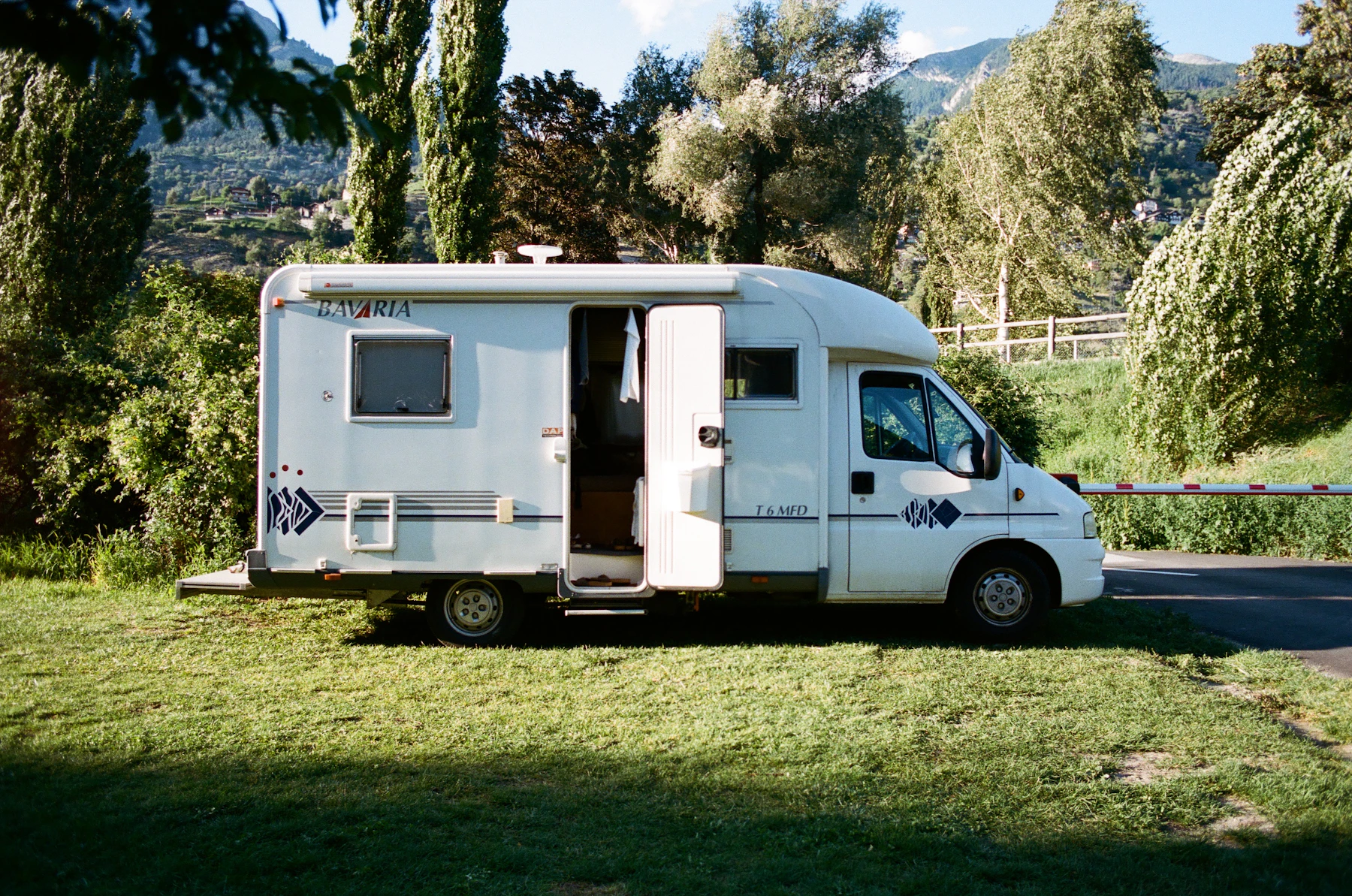
The Nordic right to roam is a right of access on foot, and in three of these four countries it includes pitching a tent. It does not include parking a motorhome and going to sleep in it. That is the sentence most English-language writing on this subject leaves out, and it is the one that decides whether the rule is any use to you.
The four countries are also not one system. Sweden, Norway and Finland each have a general access right, and even those three differ on the details that matter. Denmark has something else entirely. Here is what each country’s own authority says, and where we came up empty.
The vehicle question, first
If you are driving, this is the part to read.
Sweden. Naturvårdsverket, the Swedish Environmental Protection Agency, publishes the official code in English. It says: “The right of public access doesn’t cover motor vehicles.” On the page listing where the right does not apply it goes further: “Exploring Sweden by camper, roof tent or caravans? Driving and parking off-road is illegal and not covered by the right of public access.” Motor vehicles are not allowed on natural land such as beaches, forests and meadows. Verified.
Norway. Miljødirektoratet, the Norwegian Environment Agency, states that allemannsretten does not include travel by motor vehicle in utmark. Friluftsloven itself frames the right in section 2 as access on foot, year round. Verified.
Finland. Metsähallitus, the state agency for parks and state land, lists “drive a motor vehicle off the road” among the things everyman’s rights do not permit. Verified.
Denmark. Naturstyrelsen, the Danish Nature Agency, states that motorkørsel is not permitted in state forest and nature areas. Verified for those areas, and only for those areas.
What none of that tells you is where you may then park. Overnight parking on public roads, laybys and parking areas is road and parking law plus municipal rules, a separate body of law in each country, and we did not read it. So we are not going to tell you a motorhome is fine anywhere on the basis of an access right that explicitly excludes it. If you are driving, you are looking for a designated stopover, not for a right to roam. See wild camping, free camping and aires for why those are three different things.
Sweden: allemansrätten
Allemansrätten is the Swedish right of public access. Keep the word: it is what every sign, leaflet and official page will call it.
Nights. The official code puts it as a rule of thumb rather than a statutory count: “Don’t overstay your welcome, one or two nights is the rule of thumb.” If you are a group with several tents, you need the landowner’s permission.
Distance from houses. There is no metre figure in this source, and we are not going to supply one. The code describes a private protection zone around someone’s residence and tells you that people living nearby should not be able to see or hear you from their property. It also says to keep more distance when you stop to camp or eat than when you are simply walking past. Where the zone begins depends on the ground: the code suggests reading hedges, roads, ditches and forest edges, and notes the zone is likely smaller in hilly or densely vegetated terrain and larger in open, flat country.
What is excluded. Areas with growing crops. The private zone around a residence. Cultivated land generally, meaning land used for farming or gardening. National parks and nature reserves, where camping may be prohibited outright. Municipal regulations, which the code confirms can restrict the right of public access and may ban camping or fires in particular areas. Hunting and fishing sit outside the right as well.
Vehicles. Excluded, as above. This is the clearest statement of the four.
Norway: allemannsretten
Norway is the country where the widely repeated English figures turn out to be right, and we say so because we read the statute this time rather than a summary of it. Friluftsloven, the Outdoor Recreation Act of 1957, is on Lovdata, the official Norwegian legal database.
Distance. Section 9 says a tent must not be set up so near an inhabited house or cabin that it disturbs the residents’ peace, and in any case not nearer than 150 metres. So the 150 is real and it is statutory. Note the first half of that sentence though: 150 metres is a floor, not a permission slip. Being 151 metres away and audible all evening is still not what the section describes.
Nights. The same section: camping or other stays are not permitted for more than 2 døgn at a time without the owner’s or user’s consent. Consent is not needed in the high mountains, or in areas far from settlement, unless the stay would cause appreciable damage or inconvenience.
One thing we did not verify. Section 9 also allows the ministry to make regulations permitting tents closer than 150 metres from an inhabited house in coastal areas. We did not check which of those coastal regulations are currently in force, so treat the 150 as the general position and check locally on the coast. We also did not check camping regulations inside verneområder, Norway’s protected areas, which set their own rules.
Finland: jokamiehenoikeudet
Jokamiehenoikeudet, everyman’s rights, apply across most of Finland. What we can state about them is shorter than you might expect, and that is the honest result rather than a gap we filled in.
Metsähallitus lists what you may do, including: “stay and set up camp temporarily in areas where access is otherwise allowed.” And what you may not do, including: “violate the privacy of other people’s homes, for example by camping too close to their houses”; “walk in private gardens or planted or cultivated fields”; “drive a motor vehicle off the road.”
Nights: not verified. The source says temporary. It gives no number, so we give no number.
Distance: not verified. The source says not too close to houses. It gives no metres, so we give no metres. Finland is not Norway and we are not going to lend Finland Norway’s 150.
Protected areas: not verified. Metsähallitus sets separate rules for national parks, and we did not check them.
We also tried to read the Ministry of the Environment’s own page on everyman’s rights and the server returned a 403, so we could not open it. Everything above comes from Metsähallitus and from ymparisto.fi, which points to Metsähallitus as its source on the subject.
Denmark: the one that is not a right to roam
Denmark gets described in English as a Nordic right-to-roam country and it is not one, at least not in the sense the other three are. If you are planning a Danish trip on that assumption, replan it.
What Denmark actually has is Naturstyrelsen, the Danish Nature Agency, granting permissions on land the state owns.
Fri teltning, free tent camping. The agency calls it the 1-2-3 rule: one night in the same place, at most two tents, each for at most three people. The tent must not be visible to other people using the forest, whether walking on paths or driving on forest roads, and must not be visible from buildings. In practice that means under trees. It is not permitted on beaches or dunes, and not on meadows, marshes, heaths, fields or other treeless clearings. The agency states the state holds 275 forests, and the scheme applies to statens skov- og naturområder, the state’s forest and nature areas. We did not verify the current list of which forests, and nothing here tells you anything about privately owned forest, municipal land or beaches outside state ownership.
Primitive overnight sites. Free to use, for the overnight stay and for the fire pit, and you may stay up to two consecutive nights.
Shelters. Some are first come first served. Others can be booked, up to two consecutive days at a time, up to three months ahead, with confirmation asked ten days before. You share the fire pit and the benches with whoever else is there.
This structure is the reason Denmark is a mapping country for us rather than a rules-only one. Shelters and primitive sites are designated places that a named authority has designated, which is exactly our bar for putting a pin on a map. See Denmark.
One source we use for places but never for rules: udinaturen.dk. It comes up constantly in English writing about Danish camping, and the data behind it is where the Danish shelters and tent sites on this site come from, because each record names the authority responsible for the site. What it is not is a statement of what is legal: it is a directory of outdoor facilities with no rules text. So it tells you a shelter exists and who runs it, and Naturstyrelsen tells you what you may do. Everything above about Denmark comes from Naturstyrelsen.
What we verified and what we did not
| Nights | Distance from houses | Motor vehicles | |
|---|---|---|---|
| Sweden | One or two, rule of thumb | Not verified, no figure given | Excluded, verified |
| Norway | 2 døgn, statutory | 150 metres, statutory | Excluded, verified |
| Finland | Not verified | Not verified, no figure given | Off-road driving excluded, verified |
| Denmark | One night free camping, two at a primitive site | Not applicable, out of sight of buildings | Barred from state forest and nature areas, verified |
The blanks are blanks. They mean we did not find it in an official source, not that there is no rule. Treat an unverified cell as a reason to check, not as permission.
Country by country context for the rest of the continent is in free camping in Europe, and the cited rules summary these countries share sits at the Nordic right to roam rules page.
The sign wins
Every one of the four sources says some version of the same thing: a local authority, park administration or landowner can override the general position for a specific place. Sweden’s code tells you to look for signs and check the County Administrative Board or the municipality. Norway’s protected areas run on their own regulations. Metsähallitus sets park rules separately. Naturstyrelsen’s permissions apply to specific land it names.
So the posted sign and the current guidance from whoever manages the ground you are standing on beat this page, beat the general rule, and beat whatever an app told you. If the sign and this guide disagree, the sign is right.
Sources
- The Right of Public Access, Naturvårdsverket, English edition 2025
- Lov om friluftslivet (friluftsloven), Kapitel I, Lovdata
- Allemannsretten, Miljødirektoratet
- Hvor kan jeg sette opp telt eller hengekøye?, Miljødirektoratet
- Everyman's rights, Metsähallitus (luontoon.fi)
- Recreation in nature, ymparisto.fi
- Fri teltning, Naturstyrelsen
- Primitive overnatningspladser og shelters, Naturstyrelsen
When a source is not in English, follow the link for the official wording.