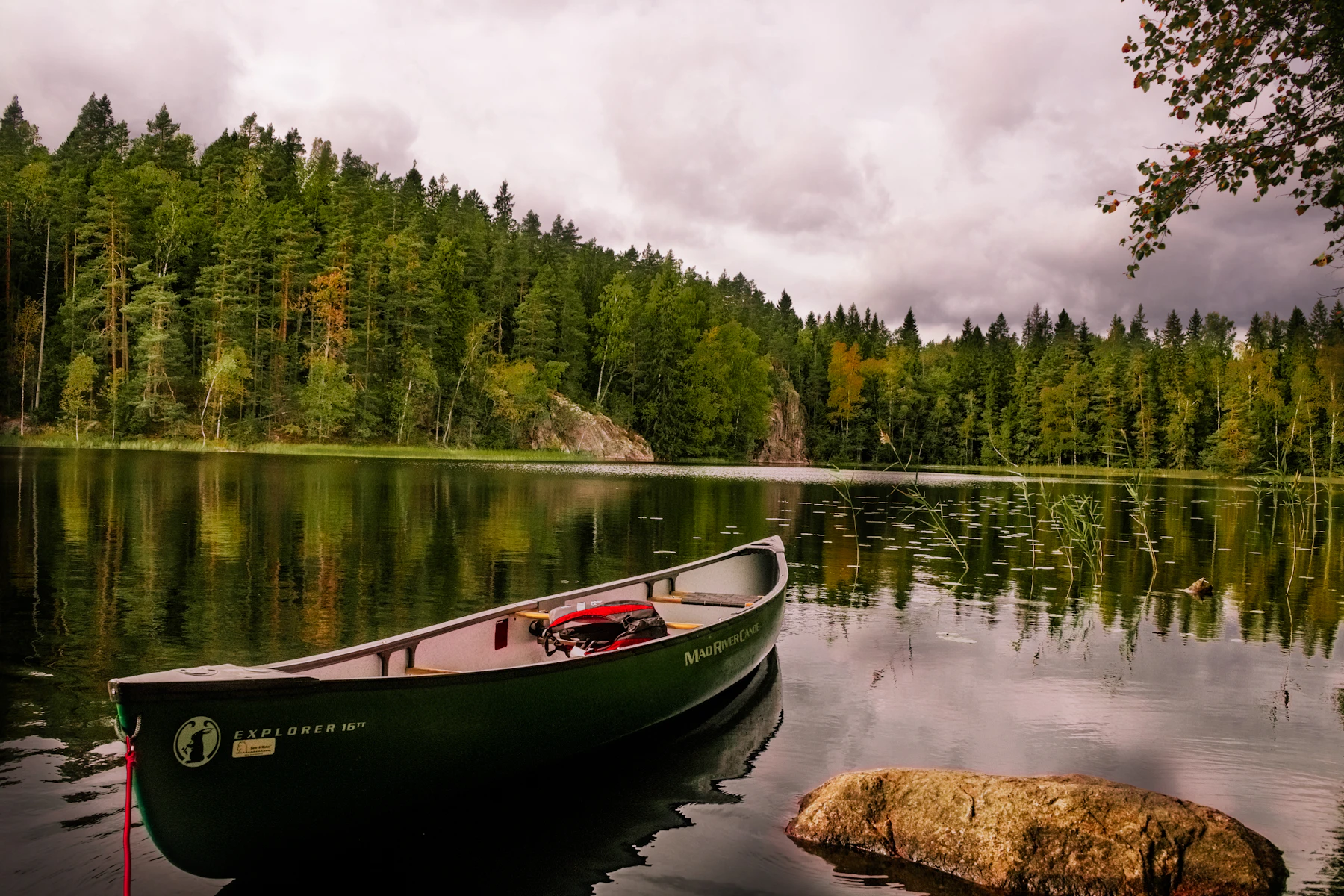
“Wild camping is legal in Scotland” is true, and it is also the sentence that gets visitors into trouble, because the right is narrower than it sounds. It covers a tent. It does not cover the vehicle you drove there in. And a national park byelaw can switch it off in the exact places most people want to sleep.
Here is what the rule actually says.
The right, and where it comes from
The Land Reform (Scotland) Act 2003 created a statutory right of responsible access to most land and inland water in Scotland. The Scottish Outdoor Access Code, published by NatureScot, is the official guidance on what “responsible” means in practice. It is the document to read, and it is short.
This is not a tolerance or a tradition. It is a right in statute, which is why Scotland is different from England and Wales, and why writing about “wild camping in the UK” as a single thing is usually wrong.
What “responsible” means
The Code is specific about camping. In its own words, the right includes “lightweight camping in a tent, in small numbers and for no more than two or three nights in one place.”
Unpack that and you get four conditions, all of which have to hold:
- Lightweight. You carry it. This is backpacking gear, not a base camp.
- In a tent. Not a vehicle. See the next section, because this is the part that catches people.
- Small numbers. The Code asks you to use small tents. A large group is not what the right describes.
- Two or three nights, then move on. Then you go somewhere else.
The Code also asks you to camp well away from buildings and roads, to avoid enclosed fields of crops or farm animals, to have a backup plan and go elsewhere if the area is busy, and to take away all belongings and litter and leave no trace of your visit.
The big one: it does not cover your campervan
If you are planning this from the US, Canada or Australia and picturing a van parked by a loch, stop here. The Access Code says it plainly: access rights do not include motor vehicles.
That single line removes campervans, motorhomes and car camping from the whole conversation. The right of responsible access is a right to be on the land on foot and by other non-motorized means. It says nothing about where you may park a vehicle and sleep in it.
So overnighting in a vehicle in Scotland is not an access-rights question at all. It is a parking question, and the answer comes from three other places:
- Road traffic law and the roads authority, for anything on the public road network.
- Whoever owns the land or the car park. The Code tells you directly that if landowners restrict or regulate parking on their land, you must respect it. Many car parks prohibit overnight parking.
- Any local byelaw, which can add a further layer on top of both.
None of those default to yes. If you are traveling by van, what you want is an official stopover or a campsite, and the distinction between the two is worth understanding before you go: see wild camping vs free camping vs aires and free camping in Europe.
Leave no trace, in the Code’s own terms
Litter. Take away all belongings and litter. The Code is blunt about leaving no trace of the visit.
Toilets. The Code gives actual practice rather than a slogan. Pack a trowel, toilet paper, hand sanitizer and sealable bags. If you need to pee, do it at least 30 meters from lochs, rivers and burns so you do not pollute the water. If you need to poo, go as far as possible from buildings, paths, open water, rivers and farm animals, and then either bury it in a shallow hole and replace the turf, or bag it and carry it out.
Fires. The Code does not ban open fires outright, and anyone telling you it does has not read it. What it says is narrower and more useful. Do not light an open fire, including in fire bowls or BBQs, during times of high fire risk (prolonged dry weather) or near forests, farmland, peaty ground, buildings or historic sites. Pay attention to fire danger warnings and information from the Scottish Fire and Rescue Service, and follow local advice. Use a camping stove if you need to cook, on a level non-flammable surface away from dry grass and vegetation. Leave deadwood on the ground and never cut or damage trees. Pick up broken glass, which acts as a magnifying glass in sun, and take away cigarette ends.
Scotland looks wet. It still gets wildfires, and the Code says so.
Loch Lomond: where “legal in Scotland” stops being the answer
Loch Lomond and the Trossachs National Park is the worked example of why the national position is not the local one. The park authority introduced camping management byelaws on 1 March 2017, and they are still running. Checked against the authority’s own pages on 20 July 2026:
Four Camping Management Zones. West Loch Lomond, East Loch Lomond, Trossachs West and Trossachs North. Together they cover less than 4% of the park. The authority describes a zone as the land from the affected lochshore to the nearby road, plus roughly 200m on the other side of the road, or as far as the nearest visible feature such as a field boundary or track. They sit along the busiest lochshores, which are the ones easily reached by road, which are the ones most visitors were heading for.
1 March to 30 September, every year. Outside those dates you can camp inside a zone without a permit, following the Access Code as normal.
In season, inside a zone, you need a campsite or a permit. There is no third option. A camping permit costs 4.30 pounds per tent or per motorhome or campervan per night. The maximum stay in one permit area is three consecutive nights. Arrival is from 1pm, and you leave by 11am on the day of departure. Organized youth groups can apply for permission at no charge.
The byelaws cover vehicles too. The authority says they affect anyone staying on and around the covered lochshores in season “whether they are in a tent, motorhome, campervan or caravan”. Motorhome and campervan permits exist at three locations only: Firkin Point and Inveruglas on the west side of Loch Lomond, and Three Lochs Forest Drive near Aberfoyle. A motorhome permit assigns you a specific location and a numbered parking bay, so it is a booked space, not permission to park anywhere in the zone. A 3 pound vehicle charge also applies at Three Lochs Forest Drive. The authority says these permit areas are not suitable for caravans, and that they have no water or waste disposal points. Do not empty a toilet cassette there.
Fires are covered separately. The byelaws also cover irresponsible fire-lighting and collecting wood, including chopping trees for firewood. If you want a fire, build it where it will cause no damage or use a fire bowl, and bring your own wood.
Lay-bys are a different case. The authority states that you do not need a permit to stop in an official lay-by that forms part of the roads network, and that lay-bys are meant as rest stops rather than extended stays. Passing places are not lay-bys and must be kept clear.
The penalty. Rangers advise first. But the authority says failure to comply could result in a report to the Procurator Fiscal and a fine of up to 500 pounds.
One thing we have not verified: the exact boundary of each zone. The authority publishes zone maps, and we have not traced them, so we cannot tell you whether a given location falls inside or outside. Check the maps and the signs.
Anywhere else in Scotland?
The Access Code’s camping page says byelaws restrict camping in some areas, and the only area it names is Loch Lomond and the Trossachs. We have not verified any other specific local restriction against an official source, so we are not going to name one. That is not the same as saying there are none. Check the local authority or the relevant park authority page for wherever you are actually going.
The full rules summary, with the sources and dates, is on our Scotland Outdoor Access Code page.
The sign wins
If a posted sign or the current guidance of the local authority or park authority says something different from this page, they are right and we are out of date. Zone boundaries move, permit prices change, and seasonal dates get revised. Read the sign, and check the authority’s own page before you count on any of this.
Sources
- Camping, Scottish Outdoor Access Code
- Camping Management Byelaws, Loch Lomond & The Trossachs National Park Authority
- Camping and Motorhome Byelaw Q&As, Loch Lomond & The Trossachs National Park Authority
Where the original is not in English, the summary above is ours and the linked text is the authority.